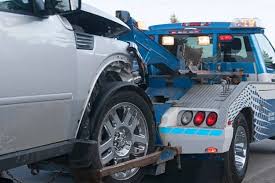
Modern recovery vehicles are no longer just powerful engines with hooks; they’re advanced machines equipped with specialized hardware and software. Tow trucks have evolved from basic pickups with crude chains to sophisticated fleets focused on safety, speed, and damage-free transport, showcasing the industry’s growing professionalism and technical advances.
Types of Recovery Vehicles
Not all tow trucks are created equal. The equipment required depends heavily on the specific vehicle type being dispatched. Operators generally rely on three main categories of trucks, each with a specific purpose.
Flatbed Tow Trucks
The flatbed, or rollback truck, is the most common sight on modern roads. These vehicles feature a large, flat hydraulic bed that can be inclined and slid back to ground level.
The primary benefit of a flatbed is safety for the towed vehicle. Because the car rests entirely on the platform, there is no wear and tear on the tires, and the transmission remains disengaged. This makes flatbeds the only safe option for all-wheel-drive vehicles or cars with low ground clearance. In accident scenarios where a car is too damaged to roll, a flatbed is essential because the operator can drag the vehicle up the ramp rather than trying to lift it by a damaged bumper.
Hook and Chain Tow Trucks
This is the oldest method of towing and is rarely used for standard roadside assistance today. These trucks use heavy-duty chains wrapped around the axle or frame of the vehicle, which is then lifted by a boom.
While effective for lifting heavy loads, the metal-on-metal contact can scratch bumpers and damage the drivetrain. Consequently, hook and chain trucks are now mostly relegated to “junk” towing—moving wrecked cars to salvage yards where further cosmetic or mechanical damage is irrelevant.
Wheel Lift Tow Trucks
Think of the wheel lift as the evolved version of the hook and chain. Instead of wrapping chains around the axles, these trucks use a metal yoke that slides under the front or rear wheels. A hydraulic system lifts the vehicle by its tires, leaving the rest of the car untouched.
Wheel lift trucks are generally smaller and more agile than flatbeds. This makes them the superior choice for urban environments, parking garages, and tight city streets where maneuvering a massive flatbed would be impossible.
Essential Hardware and Rigging
Regardless of the truck type, successful recovery relies on specific pieces of hardware. This gear ensures that once a vehicle is secured, it stays that way.
Winches and Cables
The winch is the muscle of the operation. Mounted at the front of the bed or on the boom, the winch is a mechanical device used to pull in (wind up) or let out (wind out) the heavy-duty cable.
There are generally two types of winches used: electric and hydraulic. Electric winches are faster and easier to install, but hydraulic winches offer sustained power without the risk of overheating during difficult extractions. These are crucial for “recovery” work, such as pulling a vehicle out of a muddy ditch or up a steep embankment before it can even be attached to the truck.
Straps and Chains
Securing the vehicle is an art form. Chains are durable and strong, often used for securing heavy equipment or wrecked vehicles where frame contact isn’t an issue. However, for standard passenger vehicles, soft straps are the industry standard.
These heavy-duty polyester straps go over the wheels or attach to control arms, securing the vehicle to the truck bed without scratching the paint or bending suspension components. Operators must carefully select straps based on their Working Load Limit (WLL) to ensure they can handle the forces generated during transport, especially during sudden stops.
Lighting and Safety Gear
Roadside recovery is dangerous work. High-visibility equipment is vital for protecting the operator and other drivers. Modern trucks are outfitted with high-intensity LED light bars, strobe lights, and work lamps that illuminate the entire scene. Unlike older halogen bulbs, LEDs are brighter and draw less power, allowing operators to run them for longer periods without draining the truck’s battery. This visual communication warns approaching traffic to slow down and move over.
Advanced Technology Integration
The biggest changes in the industry aren’t happening on the back of the truck, but inside the cab. Digital integration has streamlined how recovery professionals operate.
GPS and Fleet Dispatch
The days of radioing directions to a driver are fading. Modern recovery vehicles are integrated into complex fleet management systems. GPS telematics allow dispatchers to see exactly where every truck is in real-time.
This technology improves response times significantly. When a call comes in, the system identifies the closest available unit with the right equipment for the job. It also provides the driver with turn-by-turn navigation that accounts for traffic jams or road closures, getting help to the stranded motorist faster.
Hydraulic Precision
Hydraulics have always been part of towing, but modern systems offer granular control that wasn’t possible decades ago. Advanced hydraulic systems allow for smoother operation of the flatbed or boom. This precision is critical when loading a sports car with only inches of clearance or trying to upright a flipped vehicle without causing secondary damage.
On-Site Diagnostic Tools
Some modern recovery services are blurring the line between a tow truck and a mobile mechanic. Many trucks now carry OBD-II diagnostic scanners. Before loading a car, an operator can plug into the vehicle’s computer to read error codes. In some cases, the issue might be a simple sensor error or a battery fault that can be fixed on the spot, saving the driver the cost and hassle of a full tow.
The Future of Recovery Vehicles
The industry continues to innovate, looking toward sustainability and automation.
Electric and Hybrid Tow Trucks
As the automotive world shifts toward electrification, recovery vehicles are following suit. Electric tow trucks offer massive instant torque—perfect for hauling heavy loads—while eliminating tailpipe emissions. For urban operators, this also means quieter operation, allowing for late-night recoveries in residential areas without waking the neighborhood.
Autonomous Towing Systems
While we aren’t quite at the stage of robot tow trucks, autonomous technology is creeping in. Semi-autonomous driving aids, like lane-keep assist and adaptive cruise control, make long-distance towing safer for operators to manage. In the future, we may see fully autonomous support vehicles that can deploy cones or flares to secure a scene before the human operator even steps out of the cab.
Moving Forward
The equipment used in modern recovery vehicles represents a perfect intersection of heavy-duty mechanical engineering and digital precision. From the hydraulic power of a flatbed to the algorithmic efficiency of GPS dispatch, every tool serves a specific purpose: to clear roads quickly and protect valuable assets.
Whether you are stuck in a major metropolitan hub or looking for specialized towing services in Ann Arbor, the technology working behind the scenes is what ensures you get home safely. Next time you pass a recovery vehicle on the highway, you will likely spot the complex array of lights, hydraulics, and hardware that makes it all possible.
Conclusion
Now that you have a deeper understanding of the technology behind roadside assistance and recovery vehicles, you can appreciate just how essential they are in keeping our roads safe and clear. From GPS dispatch systems to specialized towing equipment, each tool plays a crucial role in efficiently handling emergency situations on the road.

