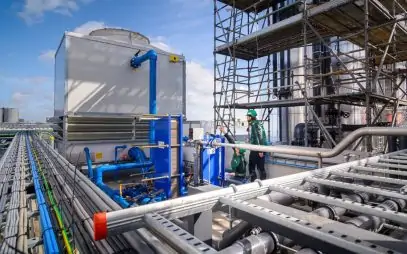
Temperature control is an unseen but crucial aspect of modern industry. Large-scale cooling and chilling systems are the backbone of many operations, such as keeping food fresh during transport and preventing servers from overheating. These are not simply larger versions of standard air conditioners but are complex, engineered solutions designed for precise and efficient heat transfer.
Understanding the Different Types of Cooling Systems
Not all cooling needs are the same, and neither are the systems designed to meet them. Broadly speaking, large-scale cooling solutions fall into a few primary categories, each suited for different environments and requirements.
Air-Cooled Chillers
These systems are popular for their simplicity. They work by absorbing heat from process water and transferring it into the ambient air. Air-cooled chillers are typically installed outdoors—often on rooftops—to have access to fresh air. They are easier to install and require less maintenance than water-cooled counterparts because they don’t need a cooling tower. However, their efficiency can fluctuate based on the outside temperature.
Water-Cooled Chillers
Water-cooled systems are the heavyweights of the cooling world. They use water to absorb heat from the refrigerant, which is then dissipated through a cooling tower. Water conducts heat far better than air, making these systems significantly more efficient, especially in larger facilities or hot climates. The trade-off is complexity; they require a constant water source, water treatment to prevent scaling or biological growth, and more rigorous maintenance.
Evaporative Cooling Systems
Sometimes called swamp coolers, these systems use the natural process of evaporation to lower temperatures. Warm air passes over water-saturated pads, causing the water to evaporate and absorb heat in the process. This is incredibly energy-efficient but works best in hot, dry climates where humidity is low.
Absorption Chillers
While most chillers use electricity to drive a compressor, absorption chillers use a heat source—such as steam, hot water, or waste heat—to drive the cooling cycle. This makes them ideal for facilities that generate excess heat as a byproduct of their operations, allowing them to recycle that energy into cooling.
Key Components of a Cooling System
Regardless of the specific type, most mechanical cooling systems rely on a standard refrigeration cycle involving four main components. Understanding these parts helps in diagnosing issues and planning maintenance.
- The Compressor: often called the heart of the system, the compressor pumps the refrigerant through the circuit. It compresses low-pressure gas into high-pressure gas, increasing its temperature and preparing it to release heat.
- The Condenser: This is where the heat is rejected. The hot, high-pressure gas enters the condenser (which can be air-cooled or water-cooled) and releases its heat to the surroundings, condensing back into a liquid state.
- The Expansion Valve: As the high-pressure liquid leaves the condenser, it passes through this valve. The valve restricts flow, causing a sudden pressure drop. This drop cools the refrigerant significantly, preparing it to absorb heat again.
- The Evaporator: This is where the cooling happens. The cold, low-pressure refrigerant enters the evaporator and absorbs heat from the area or fluid being cooled. The refrigerant boils back into a gas, and the cycle begins anew.
Critical Applications Across Industries
The versatility of large-scale cooling means it touches almost every sector of the economy.
Food and Beverage Processing
Strict temperature control is non-negotiable here. Cooling systems rapidly chill cooked foods to safe temperatures, freeze products for long-term storage, and maintain cold chains during distribution. This ensures safety and compliance with health regulations.
Data Centers
Data centers are essentially massive heaters. Servers generate immense amounts of thermal energy, and without powerful cooling infrastructure, the hardware would fail within minutes. Precision cooling systems maintain specific humidity and temperature levels to protect sensitive electronics.
Pharmaceuticals
Drug manufacturing requires exact environmental conditions. From chemical reactions that need cooling to stay stable, to the storage of temperature-sensitive vaccines, reliable chilling systems are a matter of public health.
District Cooling
In some urban areas, a centralized cooling plant generates chilled water which is then piped underground to multiple buildings. This eliminates the need for individual chillers in every building, improving energy efficiency across the grid and freeing up valuable rooftop or basement space.
Manufacturing and Plastics
Injection molding processes generate heat that must be removed quickly to set the plastic. Efficient chilling reduces cycle times, allowing factories to produce more parts per hour.
The Strategic Benefits of Large-Scale Cooling
investing in the right cooling infrastructure offers advantages that go beyond just “getting cold.”
Energy Efficiency and Cost Reduction
Modern systems are designed with variable speed drives and smart controls that adjust cooling output to match the actual load. This prevents the system from running at 100% capacity when only 50% is needed, leading to substantial savings on electricity bills.
Product Consistency and Quality
In manufacturing and food processing, temperature fluctuations cause inconsistencies. A reliable large-scale system ensures that every batch is processed under identical conditions, leading to a uniform, high-quality product.
Equipment Longevity
Overheating is the enemy of machinery. By keeping operational temperatures within optimal ranges, you reduce wear and tear on industrial equipment, extending its lifespan and reducing capital expenditure over time.
Essential Maintenance for Peak Performance
A cooling system is a significant investment, and protecting it requires a proactive maintenance strategy. Neglect leads to efficiency drift, where the system consumes more power to do the same amount of work, and eventually, catastrophic failure.
- Regular Cleaning: Condenser coils on air-cooled chillers act like magnets for dust, pollen, and debris. Dirty coils cannot release heat effectively, forcing the compressor to work harder. Regular pressure washing is essential.
- Water Treatment: For water-cooled systems, water chemistry is paramount. Scale buildup inside tubes acts as an insulator, killing efficiency. Biological growth, like Legionella bacteria, poses severe health risks. A robust water treatment program is mandatory.
- Leak Detection: Refrigerant leaks are bad for the environment and your wallet. Low refrigerant levels reduce cooling capacity and can cause the compressor to overheat. Regular leak testing should be part of the schedule.
- Oil Analysis: Just like a car engine, the compressor needs oil for lubrication. Analyzing the oil can reveal internal wear or acid buildup before it causes a breakdown.
- Control Calibration: Sensors and thermostats can drift over time. Calibrating them ensures the system is reacting to accurate data.
The Future of Industrial Cooling
The industry is moving toward sustainability and smarter operations. One major shift is the transition to natural refrigerants with low global warming potential. This is where industrial ammonia refrigeration plays a significant role; ammonia is an incredibly efficient, natural refrigerant with zero ozone depletion potential, making it a sustainable choice for large facilities despite the safety protocols required.
Conclusion
Now that we have explored the current state and future of industrial cooling, it is clear that advancements in technology and sustainability practices are driving significant changes in this industry.

